
Last updated November 25, 2026
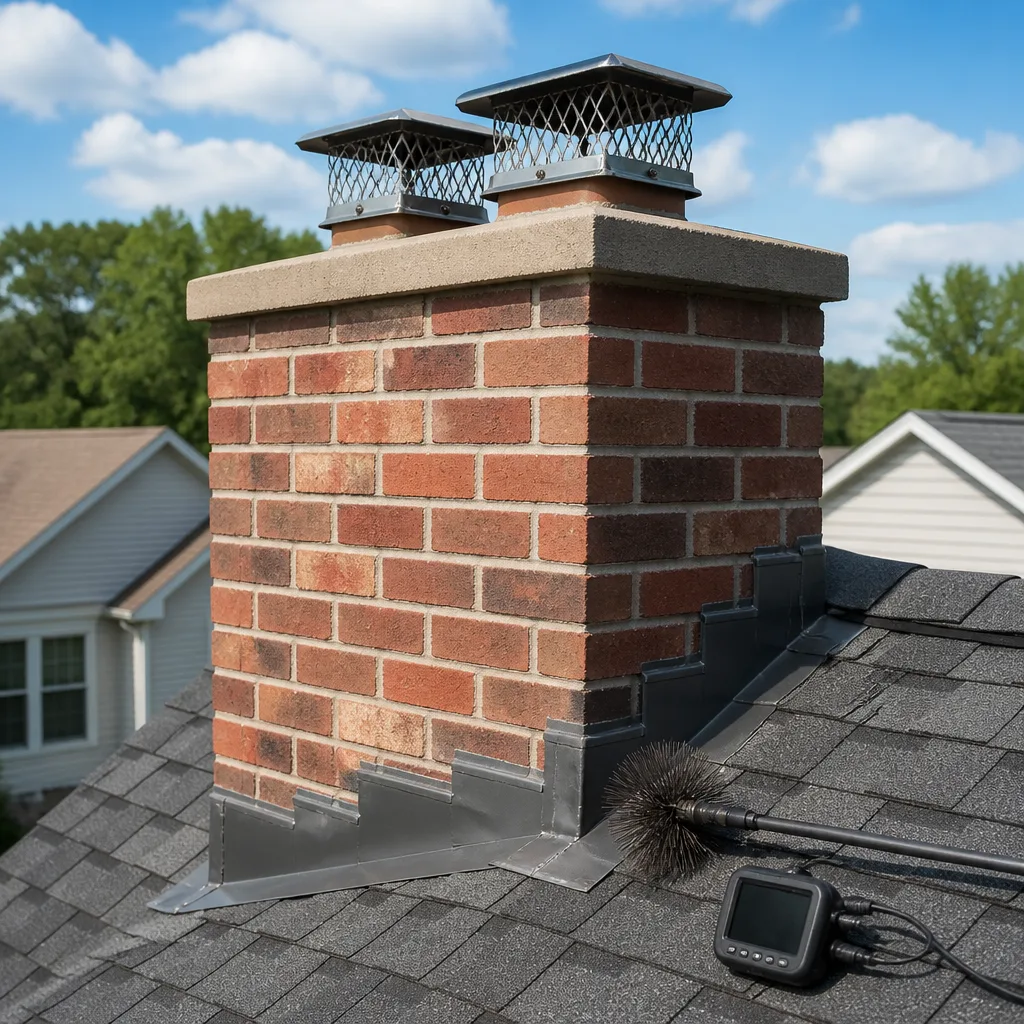 Sweep & inspection
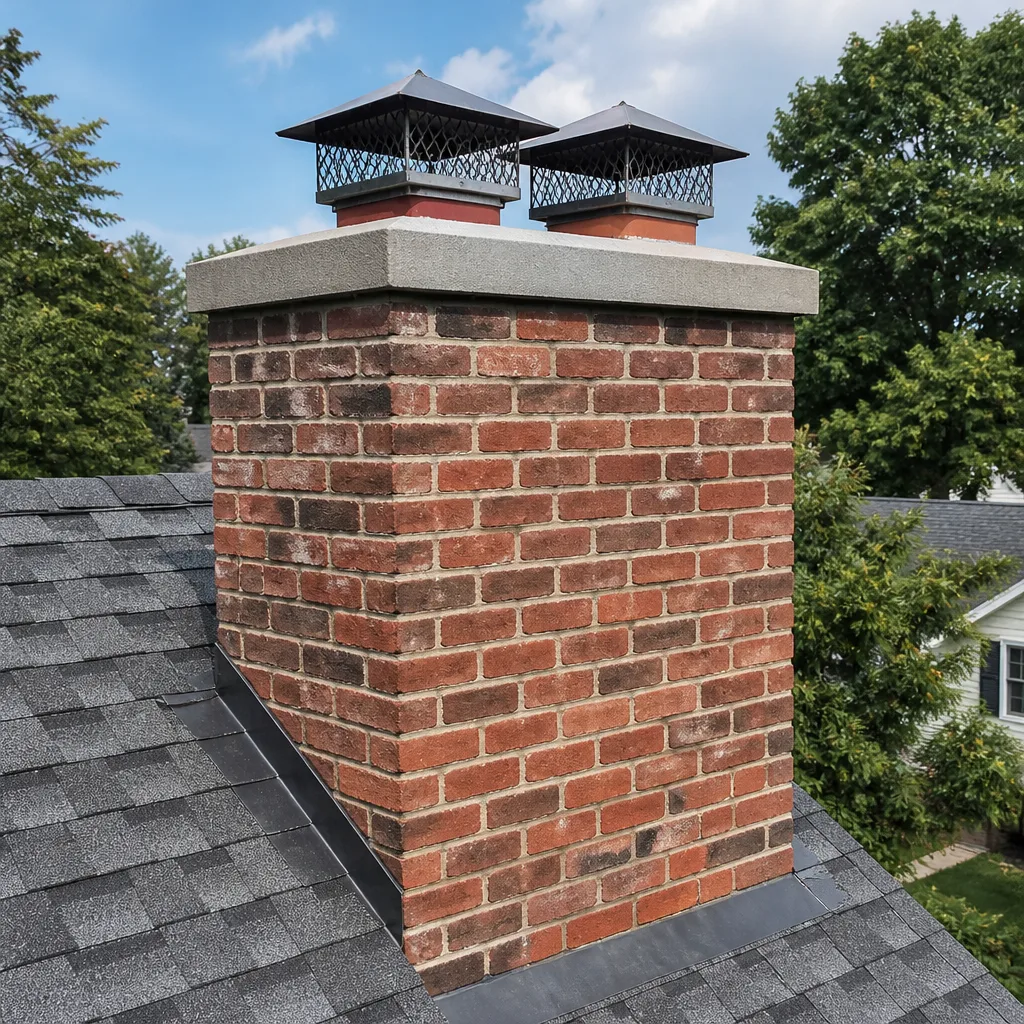 Caps & crowns
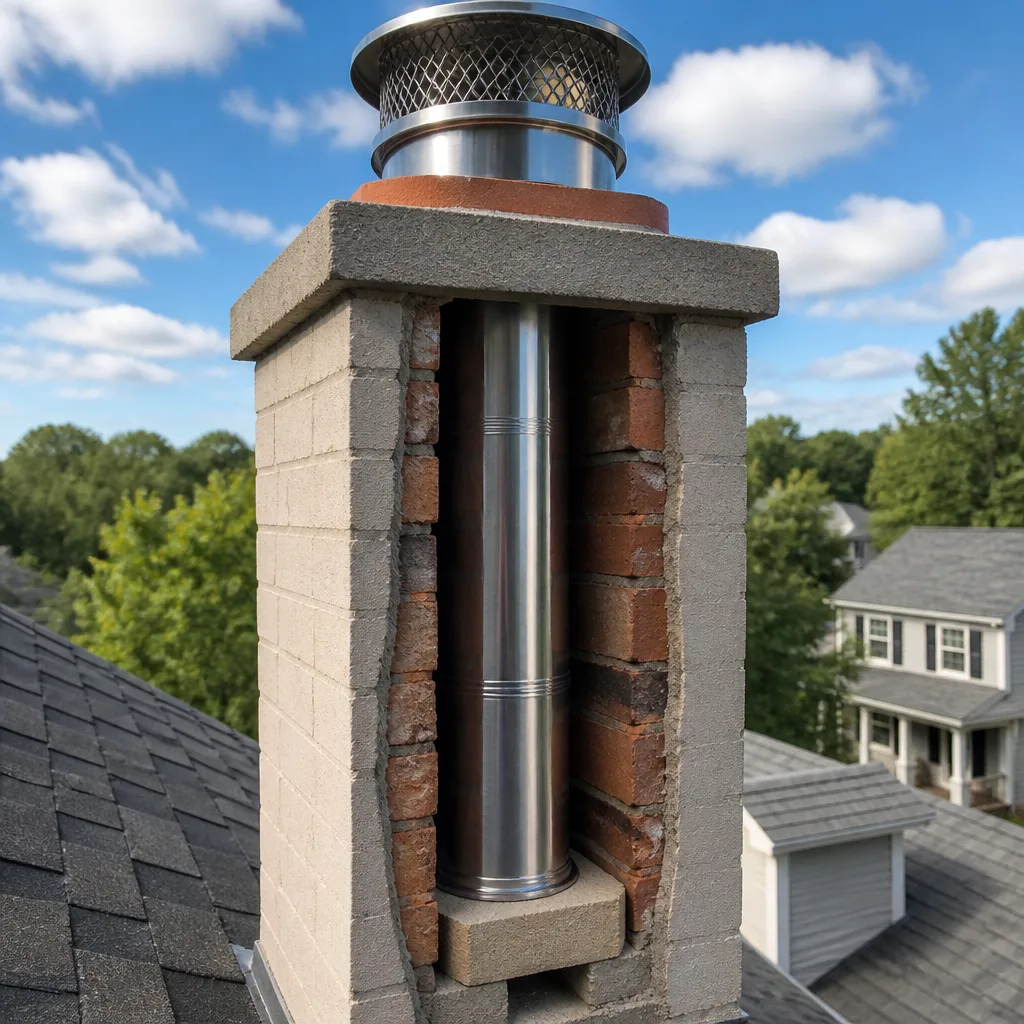 Flue relining
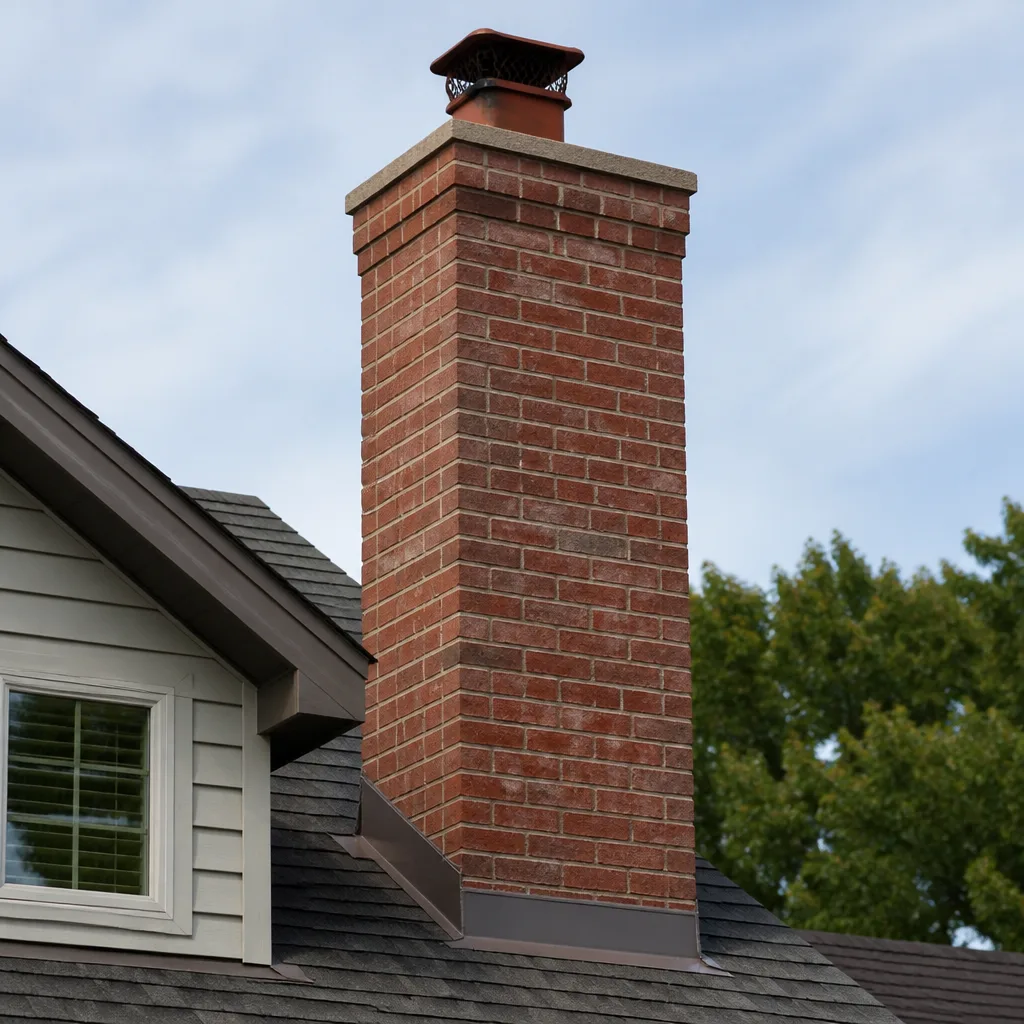 Masonry repair
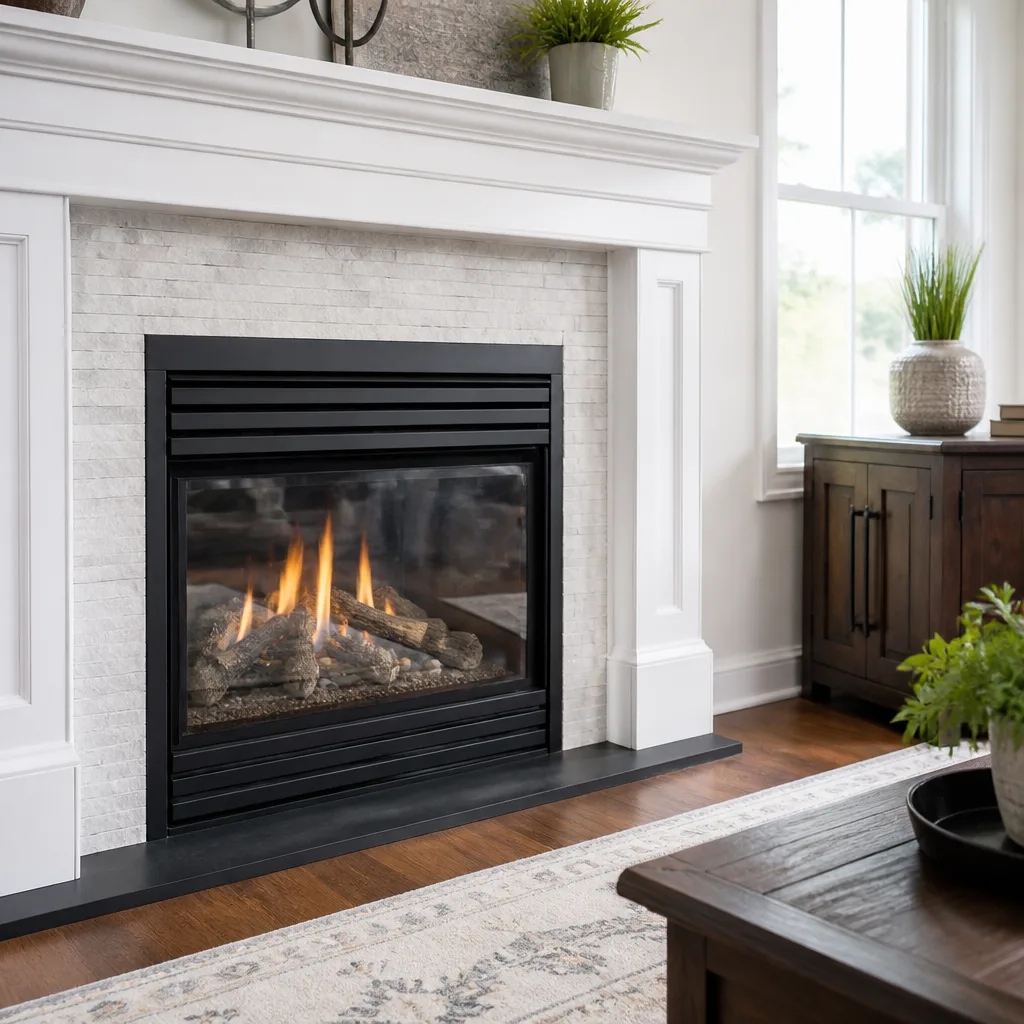 Gas fireplace service
Level 1 sweep and inspection to the NFPA 211 annual standard - flue, crown, cap, and flashing checked and photographed
Chimney sweep logs do not sweep chimneys. They loosen some creosote - which then falls where a brush and vacuum still have to collect it.
DIY vs Professional Chimney Cleaning: The Broomfield Homeowner’s Decision Guide
A chimney brush, a set of extension rods, and a dust mask will get the soot out of a flue. They won’t tell you that the tile liner section behind your smoke chamber has been cracked since last February, or that your crown has been absorbing water all spring. That’s the part most homeowners don’t factor in: sweeping is a cleaning task, and cleaning is only half of what a chimney needs each year. The other half is diagnosis, and diagnosis is what you can’t do from inside the firebox with a flashlight. In this guide, we lay out exactly what DIY chimney cleaning can reasonably accomplish, what it can’t, and how a Broomfield homeowner should decide which path makes sense for their flue.
Quick Answer
DIY chimney cleaning is reasonable only for light soot and stage-1 creosote on a straight flue with good roof access and a recent professional inspection on record. If your flue has never been professionally inspected, has a liner of unknown condition, burns steadily all winter, or shows glazed or puffy creosote, a professional sweep and inspection is the safer choice. The brush is not the hard part. Reading what’s inside the flue is.
Styles & brands we work with
- Sweep & inspection
- Caps & crowns
- Flue relining
- Masonry repair
- Gas fireplace service
Table of Contents
- What DIY Chimney Cleaning Can Actually Accomplish
- What DIY Cleaning Cannot Assess
- The Equipment Gap: Consumer Brushes vs Commercial Tools
- Colorado Insurance & Liability After a DIY Cleaning
- The Decision Matrix: DIY or Professional?
- How Broomfield Conditions Shape the Choice
- Why the Inspection Layer Matters More Than the Sweep
- How a Professional Sweep Actually Works
What DIY Chimney Cleaning Can Actually Accomplish
We’re not here to talk anyone out of a task they can safely do. In our experience, there’s a legitimate list of what a careful homeowner with the right tool can handle, and it’s worth being specific about it rather than waving the whole idea away.
DIY cleaning works best in these conditions:
- Straight vertical flue with no offsets or bends. Offsets require flexible rods and the ability to feed them through a turn without kinking or jamming. Straight runs are the easiest to sweep clean from the top down.
- Light, dry, flaky soot or stage-1 creosote. Stage-1 creosote looks like dark powder, loose flakes, or a thin crust that brushes off easily. That’s the stage a homeowner can realistically remove with a stiff brush.
- Good roof access with a safe pitch. A low-slope roof, sturdy footing, and a chimney that isn’t too tall to reach without a ladder extension.
- A recent professional inspection on record. If a sweep or inspector has looked at the flue in the past year and confirmed it’s intact, DIY cleaning between those visits is a reasonable middle-ground.
- Gas appliance with a simple flue. A gas fireplace with a short, straight, properly lined flue needs almost no cleaning, but a light annual brush-out is manageable for an attentive homeowner.
On the other hand, some configurations just aren’t DIY-friendly. A wood-burning insert with a smoke chamber that needs to be swept and a baffle that has to come out, an exterior chimney on a steep-pitch roof, or any flue where a brush can get stuck and leave a section unswept – these tend to be cases where a professional sweep is the practical choice even before you get to the diagnostic question.
The other piece of the puzzle is frequency. If you’re burning several cords of wood each winter in Broomfield, you’re likely producing more creosote per season than a homeowner who burns a couple of fires a month. Frequency drives accumulation, and accumulation drives risk. A sweep every year keeps a wood-burning chimney ahead of the creosote buildup that leads to chimney fires.
What DIY Cleaning Cannot Assess
This is the heart of the DIY-versus-professional question. Cleaning and inspection are two different jobs, and the second one is where the real risk sits. You can brush a flue and come down off the roof feeling like you did the work. What you can’t do is see inside the flue from multiple angles, check the joints between liner sections, look at the smoke chamber above the damper, or judge whether the crown has started to separate from the chimney top.
Here’s the short list of what a professional inspection covers that a DIY brush-out does not:
- Flue liner integrity. Clay tile liners develop hairline cracks from thermal cycling. A crack that runs the length of one tile can allow heat and carbon monoxide to reach combustible framing inside the chimney chase. This is one of the most common findings we log on older Broomfield homes.
- Smoke chamber condition. The smoke chamber is the sloped area above the damper that funnels exhaust into the flue. It’s notoriously difficult to see – and even harder to sweep properly – without a camera and the right tools. Rough, corbelled masonry in the smoke chamber collects creosote and can’t be cleaned with a simple brush.
- Crown and cap status. The chimney crown is the concrete or masonry cap at the very top that sheds water. When it cracks, water gets into the flue and destroys the liner from the inside out. A damaged cap lets animals and rain in. Neither problem is visible from inside the firebox.
- Draft performance. A flue that drafts poorly will spill smoke into the room when the fire starts. Draft problems have many causes – flue size mismatch, negative pressure, a flue that’s too short for the appliance – and each one needs a diagnosis, not a sweep.
- Creosote stage. Stage-1 comes off with a brush. Stage-2 is tacky and harder to remove. Stage-3 is glazed and hardened – it can look like black glass on the flue wall – and it does not come off with a consumer brush. It requires specialized tools and sometimes chemical treatment before it can be safely removed.
In short, the brush gets the soot. The inspection gets the story of the chimney’s condition. A homeowner who brushes but never inspects is playing a long game with no visibility into the actual state of the system.
The Equipment Gap: Consumer Brushes vs Commercial Tools
Consumer chimney brushes and rod kits are a real product category, not a gimmick, and they can do a decent job on light soot. Where they fall short is on the harder creosote stages and on the geometry of a real flue. Professional sweeps use heavier polypropylene brushes with stiffer bristles, weighted heads, and flexible rods that can navigate offsets without snapping or jamming.
The difference matters most for stage-2 and stage-3 creosote:
- Bristle stiffness. Consumer brushes are usually built to be gentle on liners, which is fine for soot. Stage-2 creosote has a tacky consistency that requires a stiffer brush and often a rotary action to break the bond with the flue wall.
- Rod flexibility and length. Offsets and bends need rods that flex without losing push. A jammed rod is a real risk, and a stuck brush in a flue is a job for a professional to remove – not something to solve from the roof.
- Rotary head tools. For glazed stage-3 creosote, professional sweeps use rotary whip heads that spin against the flue wall to peel the deposit off. Consumer kits do not include these tools, and there is no safe substitute that a homeowner can use.
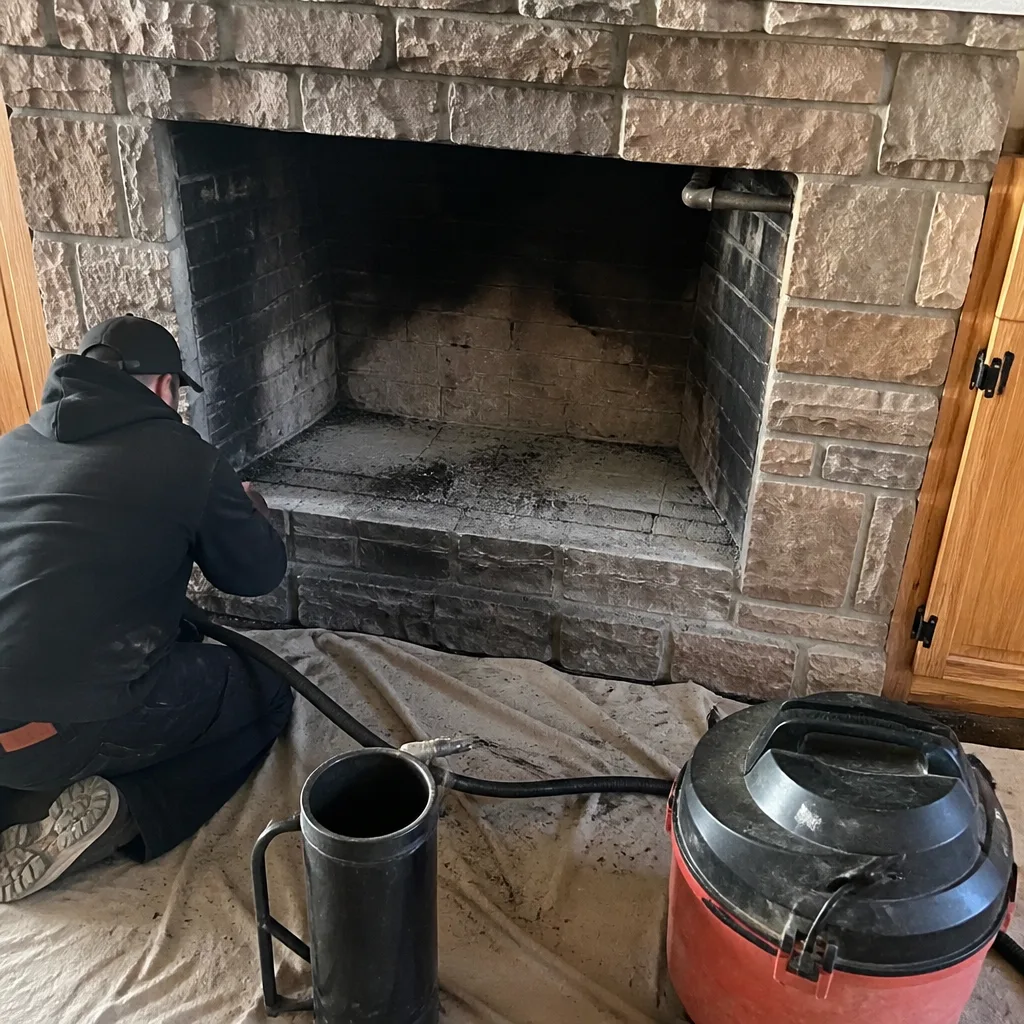
- Vacuum containment. A professional sweep sets up a HEPA vacuum at the firebox to keep ash and soot out of the living space. DIY brushing in a home without that containment means dust migrating through the house.
- Inspection camera. The tool that separates a sweep from a diagnostic visit is the camera. A professional feed shows the homeowner what the flue looks like inside and documents the condition before and after cleaning.
We name the brands we work with because the materials matter as much as the labor. When a sweep turns into a repair – say, a HeatShield application to restore a deteriorated firebox or a DuraFlex liner system for a flue that can’t be saved – the materials come from trade-grade manufacturers, not the hardware store aisle. That’s the practical difference between a $40 brush kit and a professional-grade sweep-and-inspection service.
Colorado Insurance & Liability After a DIY Cleaning
Here’s a question that doesn’t come up in most DIY-versus-professional writeups, and it’s worth raising plainly: what happens to a fire insurance claim if a chimney fire occurs after a homeowner has self-performed a cleaning with no professional inspection on record?
We can’t speak to how any specific insurer would handle a claim, and this is not legal or insurance advice. What we can say is that most Colorado homeowner policies include conditions about reasonable maintenance of the home’s systems. A chimney is one of those systems, and a chimney fire that traces back to accumulated creosote or a failed liner is the kind of event that gets scrutinized. If the last documented inspection was years ago, or if there’s no record at all, the claim investigation can get complicated.
Two practical points that a Broomfield homeowner can act on:
- Keep records. A dated professional inspection report is documented evidence that the chimney was maintained. It doesn’t guarantee anything about a future claim, but it establishes a maintenance history. Sweeps we perform include a camera inspection and a photo report, so the record exists in writing.
- Know your own policy. Read the maintenance conditions section of your homeowner policy, and ask your agent directly whether a chimney fire after a self-cleaned flue with no inspection record would be treated differently than one with a documented inspection history. That’s a question only your insurer can answer accurately.
Separately, there’s the DIY liability angle. If a homeowner cracks a flue tile while brushing – and it does happen, especially with the wrong brush or a jammed rod – the cost of the resulting repair falls entirely on the homeowner. When we sweep a chimney in Broomfield, the local professional performing the work carries their own liability, and any damage discovered or caused during the sweep is on their side of the ledger, not yours.
The Decision Matrix: DIY or Professional?
This is the part that makes the decision concrete. Use your fuel type, burn frequency, flue age, and last professional inspection date to figure out where you land. The matrix below maps the most common Broomfield homeowner situations to a recommendation.
Fuel Type and Burn Frequency
- Gas appliance, low use, straight flue, inspected in the past 12 months. DIY cleaning between professional visits is reasonable. Get a professional inspection annually and do a light brush-out if you want to stay ahead of dust and debris.
- Wood-burning fireplace, occasional use (a few fires a month), flue inspected within the past year. DIY brushing is possible if the flue is straight and accessible, but a professional sweep once a year is still the safer baseline. The inspection is what you’re really buying.
- Wood-burning fireplace, regular winter use (several fires a week), no inspection in over a year. Get a professional sweep and inspection first. DIY cleaning before a professional has seen the flue is sweeping blind.
- Wood-burning insert or stove, regular use, unknown flue condition. Professional sweep and inspection. Inserts have baffles, smoke chambers, and tighter clearances that consumer tools don’t handle well.
- Any flue with glazed, puffy, or hardened creosote visible at the damper. Professional sweep. Stage-2 and stage-3 creosote need commercial rotary tools, and attempting to remove it with a consumer brush is the situation where the brush gets stuck or the liner gets damaged.
- Flue of unknown age or construction, no inspection record. Professional inspection first. You can’t decide how to clean a flue until someone has looked at it.
Flue Age and Condition
Older flues – particularly clay tile liners past a certain service life – carry more diagnostic weight than younger ones. If the liner has never been scoped with a camera, treat the first professional visit as an inspection with a sweep attached, not a sweep with an inspection bolted on. The reverse order assumes the flue is fine, and that’s the assumption that lets a cracked liner go unnoticed.
How Broomfield Conditions Shape the Choice
A chimney in Broomfield lives through a specific set of conditions that matter to the DIY-versus-professional decision. The Front Range swings between warm, dry stretches and hard freeze events, and chimney systems that see repeated freeze-thaw cycles tend to develop masonry cracks at the crown and mortar joints earlier than chimneys in milder climates. That’s not a reason to skip DIY cleaning, but it does mean the diagnostic layer – crown condition, cap integrity, mortar joint condition – deserves real attention each year.
The altitude and dry air also affect draft. A fireplace in Broomfield at elevation can draft differently than the same fireplace at sea level, and a flue that seems to work fine on a mild day can spill smoke on a cold start. Draft problems are a diagnostic finding, not a cleaning one, and they’re one more reason the inspection matters as much as the sweep.
On the wood-burning side, the burn season in Broomfield is real. From late fall through early spring, many homeowners here are running fires several times a week. That volume adds up to more creosote accumulation per season than a homeowner who lights a fire a dozen times a year. The old rule of thumb – sweep once per cord of wood burned – is the frequency most sweeps work to. If you’re burning two cords a winter, you’re likely a candidate for a professional annual sweep rather than a quick DIY brush-out.
Housing stock matters too. Broomfield has a mix of older homes with masonry chimneys and newer construction with prefabricated, factory-built fireplace systems. Factory-built systems often have specific liner requirements and shouldn’t be swept with a generic brush. If you’re not sure which type of system you have, that’s already a sign you want a professional to look at it before you invest in a brush kit.
Why the Inspection Layer Matters More Than the Sweep
Here’s a reframe that helps a lot of homeowners think about this more clearly: on a chimney, the sweep is the maintenance task and the inspection is the safety task. You can skip the maintenance task for a season, and the consequences depend on how much creosote accumulated. You can’t skip the safety task indefinitely without eventually discovering a liner crack or a crown failure at the worst possible moment.
A professional chimney inspection in Broomfield covers, at minimum:
- A visual check of the firebox, damper, and smoke chamber from the firebox side.
- A camera scope of the flue from the top down, documenting liner condition, joint condition, and creosote stage.
- An assessment of the crown, cap, and flashing at the roof level.
- A photo report of what was found, so the homeowner has their own record to review – and to share with an insurer if the need ever arises.
- A clear recommendation: what needs attention now, what can wait, and what can safely be left alone.
Inspection is offered as a standalone service here, not just as a checkbox before an upsell. That’s deliberate. We inspect before we recommend – every time. If the flue is healthy and the sweep is all that’s needed, the homeowner hears that plainly. If something’s wrong, the camera evidence travels with the recommendation so the homeowner can see it for themselves and decide how to proceed.
How a Professional Sweep Actually Works
Here’s the sequence we follow on a standard sweep-and-inspection visit in Broomfield, so a homeowner knows exactly what a professional appointment involves and how it compares to a DIY brush-out.
- Drop cloths and vacuum setup. The firebox area is protected, and a HEPA vacuum is set up to contain ash, soot, and dust throughout the visit.
- Top-down sweep. The technician accesses the roof, removes the cap if necessary, and sweeps the flue from the top down with the correct brush for the flue type – polypropylene for most clay and metal liners, rotary heads if creosote stage requires it.
- Bottom-up check and smoke chamber. From the firebox side, the damper, smoke chamber, and firebox surfaces are cleaned and checked. The smoke chamber is the part most oversights happen on.
- Camera inspection. A flue camera is run top to bottom, and the video is reviewed with the homeowner. Any liner cracks or joint issues are documented with photos.
- Roof-level check. The crown, cap, and flashing are inspected. If the cap is missing or damaged, or if the crown has cracks that need sealing, that gets flagged – not pushed, but named clearly.
- Photo report and recommendation. The homeowner gets the report showing what was found and a recommendation: nothing needed, maintenance in the near future, or repair. Nothing is recommended without camera evidence the homeowner can look at.
Where a repair does come up, the continuum of care runs from sweeping to fireplace repair to full chimney repair, and we handle it under one roof so the homeowner isn’t handed off to a second contractor mid-project. If the firebox is deteriorated, a HeatShield application can restore the surface. If the liner is beyond saving, a DuraFlex system replaces it. If the crown is cracked, we repair or rebuild it and, where it makes sense, install a Gelco or Famco cap to protect it going forward. The point isn’t to sell a repair. It’s to close the loop between what the inspection found and what actually gets fixed.
Common Mistakes to Avoid
- Brushing without inspecting. A clean flue is not a safe flue. The brush removes soot. Only a camera inspection shows whether the liner and smoke chamber are intact. Skipping the inspection means the most dangerous defects go unseen.
- Assuming stage-1 creosote when it’s stage-2. Creosote that looks tacky or hardened at the damper is beyond what a consumer brush can handle. Force it with a light brush and the risk is a stuck brush or a damaged liner. If the deposit doesn’t come off with a light pass, it’s a professional job.
- Cleaning an insert without pulling the baffle. Wood-burning inserts and stoves have baffles and smoke chambers that need to be removed and cleaned separately. Brushing straight through without pulling the baffle leaves the smoke chamber dirty and the flue partially swept.
- Burning wet wood to “test it out.” Some homeowners burn a few fires before the sweep to check draft. Burning unseasoned wood produces more creosote and coats a fresh flue with the exact deposit the sweep was meant to remove. Use seasoned wood, swept flue, and don’t test the system with the fuel that builds creosote fastest.
- Skipping roof-level checks after a DIY sweep. The crown and cap don’t get inspected from the firebox. If the DIY routine stops at the flue, water intrusion problems – the leading cause of premature chimney deterioration – go undetected season after season.
- Assuming a general handyman has the tools. A general handyman who “also does chimneys” often doesn’t have the camera, the rotary tools, or the trade-grade material sourcing that a dedicated sweep does. Chimney care is a specialty, and the difference shows up in what gets found and what gets missed.
- Treating a sweep as a one-time fix. A chimney that drafts safely and sheds water is the standard, and that standard requires an annual routine – not a one-off cleaning after years of neglect. Consistency is what keeps a flue in good working order.
When to Call a Professional
There are clear situations where the DIY path isn’t the right call. Call a professional if you’re seeing glazed or hardened creosote at the damper, if smoke backs into the room when you light a fire, if you smell creosote or smoke in the home when the fireplace is not in use, if the firebox or damper has visible cracks or damage, if the cap is missing or the crown is cracked, or if the flue has never been inspected and you don’t know its condition. For a chimney sweep in Broomfield, Broomfield Chimney Sweep offers free estimates – call (866) 947-9222. We answer 24/7, and dispatch runs from 7am to 7pm, Sunday through Friday. If a firebox or damper needs fireplace repair, that gets handled in the same visit rather than referred out.
Frequently Asked Questions
You can clean your own chimney if it’s a straight flue with light soot or stage-1 creosote, has good roof access, and was professionally inspected within the past year. If any of those conditions is missing – unknown flue condition, glazed creosote, an insert with a baffle, or no inspection record – a professional sweep and inspection is the safer call. The cleaning isn’t the risky part. It’s what you can’t see while you’re doing it.
Once a year for most wood-burning fireplaces, and once per cord of wood burned as a working rule of thumb. A Broomfield home that runs fires several times a week through the winter is usually a candidate for an annual professional sweep. A gas fireplace with a properly lined flue needs less frequent cleaning but still benefits from an annual inspection. Call (866) 947-9222 for a free estimate if you’re not sure whether your flue is due.
Skipping one season is usually low risk if the flue was clean and sound at the last inspection. Skipping multiple seasons on a wood-burning flue allows creosote to accumulate and eventually reach stage-2 or stage-3, which is harder to remove and increases the risk of a chimney fire. The other risk is that an undetected liner or crown problem gets another year of water intrusion before anyone finds it. The sweep can wait; a flue you’ve never had inspected shouldn’t.
A standard chimney sweep in Broomfield is a per-job service priced by written estimate, and the estimate itself is free. The final price is set by that written estimate, not by a phone quote. Call (866) 947-9222 for your free estimate – we answer 24/7.
Yes. A stuck brush, an oversized brush, or a brush forced through stage-2 creosote can crack a clay tile liner or damage a metal liner. Using a stiff-bristle brush on the wrong liner type is another common cause of damage. If the liner is older or the creosote stage is anything beyond light and dry, the damage risk is higher than the cost of a professional sweep.
We can’t speak for any specific insurer, but a chimney fire claim is treated more cleanly when the homeowner has documented inspection records. Most Colorado homeowner policies include maintenance conditions on home systems, and a professional inspection report establishes a maintenance history that a self-cleaned flue with no records does not. Ask your agent directly how your policy handles it – that’s the accurate answer for your specific coverage. For a documented camera-inspection report and photo record, call (866) 947-9222 for a free estimate.
The Bottom Line
The question isn’t whether you can brush your own chimney. On a straight flue with light soot, you probably can. The question is what happens to the flue you can’t see – the liner section behind the smoke chamber, the crown that’s been absorbing water, the creosote stage that’s harder than it looks. DIY cleaning removes the soot. It doesn’t assess the flue, and the assessment is where the risk actually lives. If your flue was inspected recently and you want to brush between professional visits, that’s a reasonable middle ground. If you’re not sure of its condition, start with a Broomfield Chimney Sweep inspection and let a trained professional show you what the camera sees. From your first annual sweep to a full crown rebuild, one crew handles it – and the report they hand you is the record your insurer and your peace of mind both want.
Call (866) 947-9222 for a free estimate. We answer 24/7. Fast dispatch from 7am to 7pm, Sunday through Friday.
Written by the team at Broomfield Chimney Sweep.
See the difference
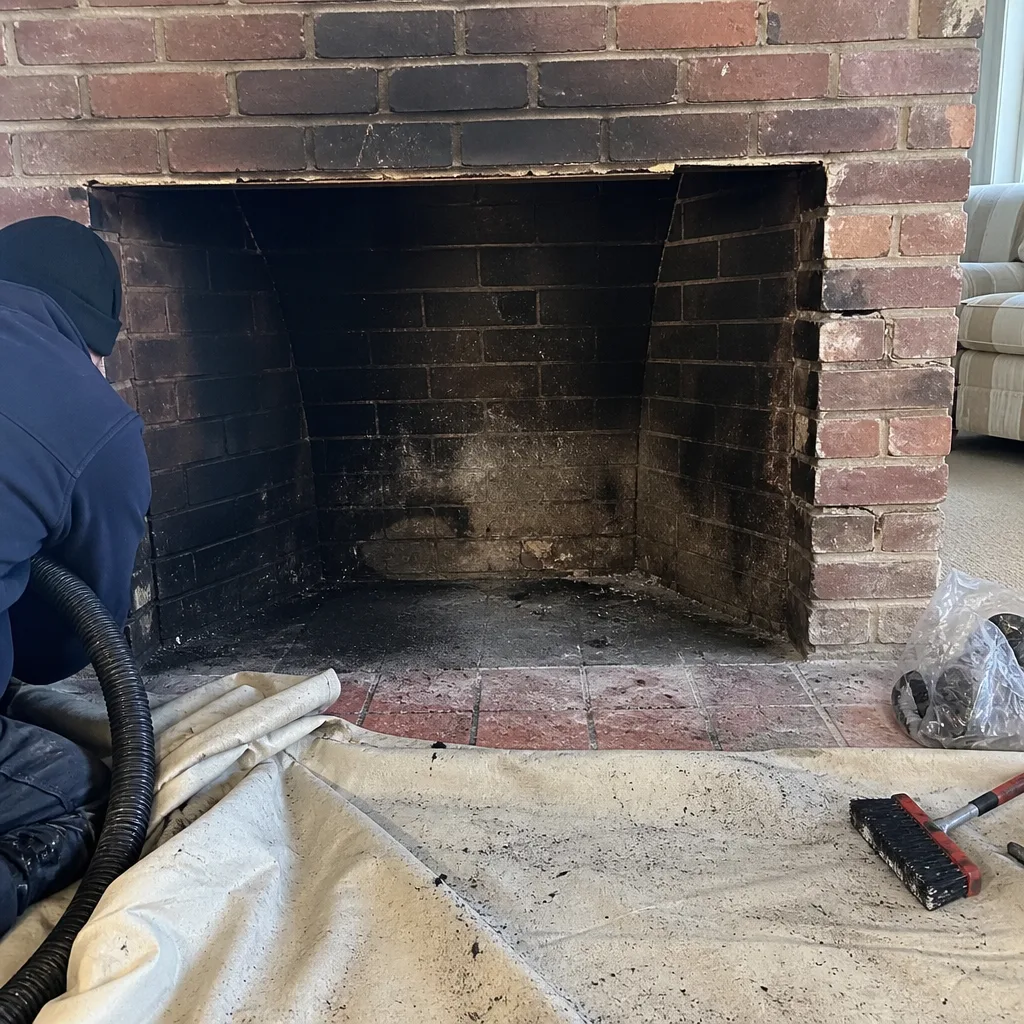 Before
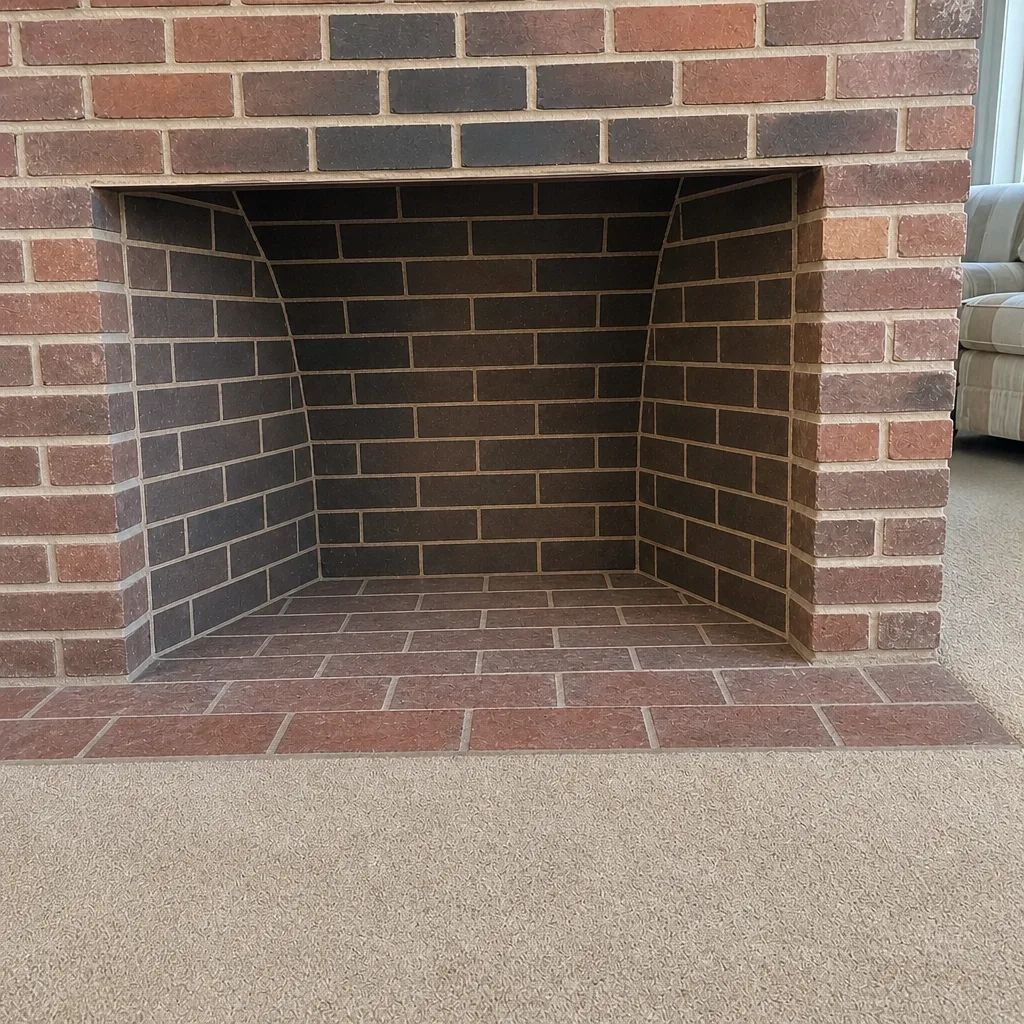 After
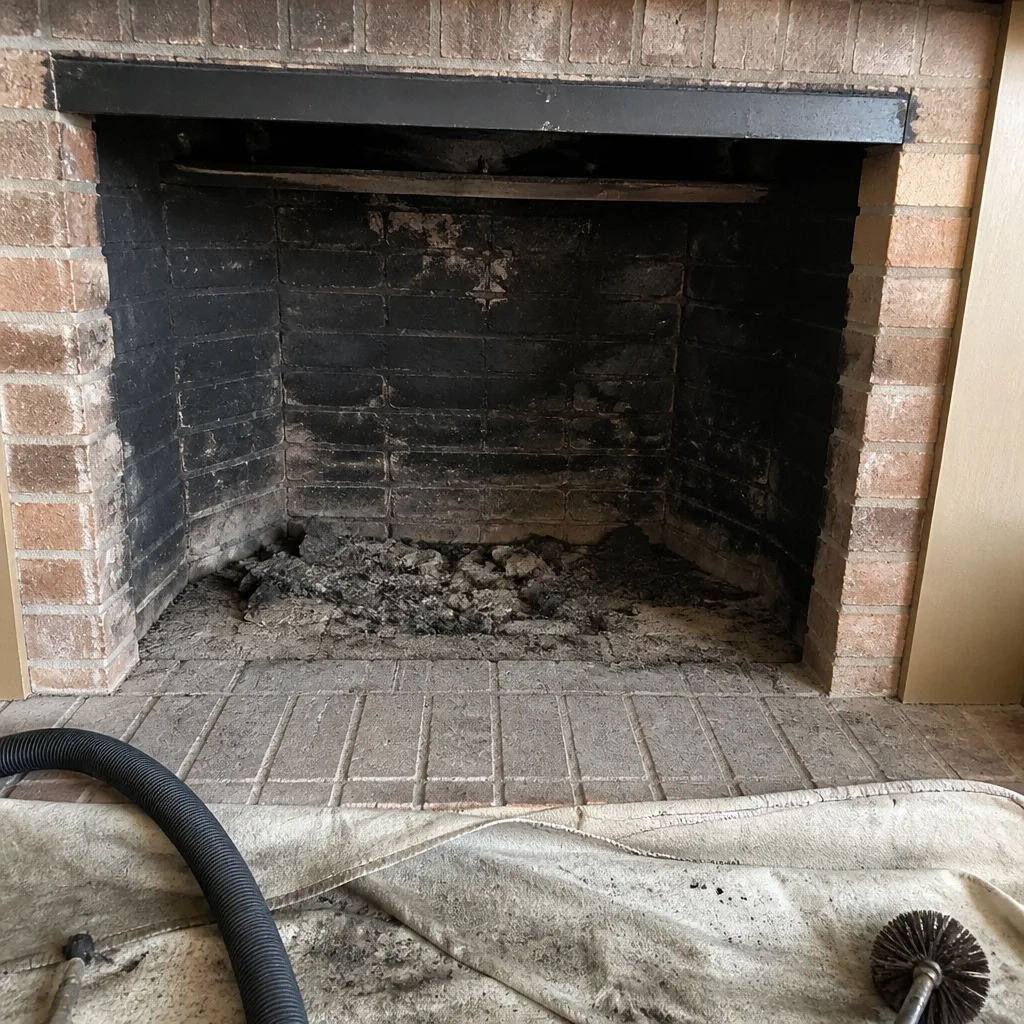 Before
 After
 Before
 After